



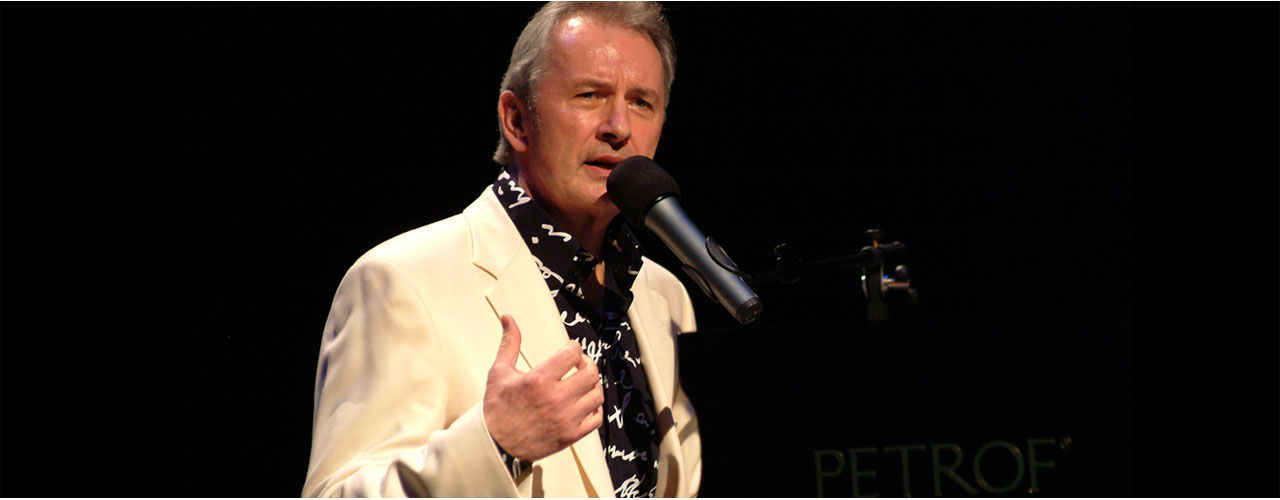
Profile
Braňo Hronec (1940): composer, pianist, conductor and bandleader. He graduated from the State Conservatory (accordion, piano) and from the Academy of Performing Arts in Bratislava (composition, conducting). He wrote chamber music, jazz pieces, popular songs and instrumentals, and music for film, television, radio and theatre. He played in and led several jazz groups and founded his own band, focused mainly on popular music and show, with which he performed successfully in almost every European country, in Central Asia and in Cuba, and also at the International Jazz Festival in Prague. (That concert was broadcast by Willis Conover, the star presenter of Music USA.)
History
| 22. 12. 1940 | Born in Hronsek into the family of a Lutheran pastor |
| 1955 | Received his first music education, piano and violin, in Banská Bystrica. Finished secondary school in Modrý Kameň |
| 1955 - 1961 | Studied accordion and piano at the State Conservatory in Bratislava |
| 1961 - 1962 | Studied conducting at the Academy of Performing Arts in Bratislava |
| 1962 - 1969 | Studied composition at the Academy of Performing Arts in Bratislava under Prof. Alexander Moyzes, the founder of Slovak symphonic music. Works from these years include a cycle of pieces for piano; the chamber trio Jazz Studies for trumpet, tenor saxophone and trombone (recorded by Czechoslovak Radio in Bratislava and released on the LP Československý jazz 1965); a quintet for muted trumpet, flute, double bass, drums and percussion; and Symphonic Twist (recorded by the Czechoslovak Radio Orchestra in Košice). |
| 1959 - 1965 | Pianist, composer and bandleader in several jazz groups |
| 1963 - 1981 | He founded his own band, which over the years was called the Braňo Hronec Quintet, the Braňo Hronec Sextet, the Bratislava Sextet, Skupina Braňa Hronca, Orchester Braňa Hronca and finally Braňo Hronec Sound. It was always the same band: rooted in jazz, it played mainstream popular music with an accent on funk, soul and jazz rock, but above all an original show that made it a success in Europe. The band performed all over Europe, in Central Asia and in Cuba. It was also a regular guest at the international music festival Bratislavská lýra. In 1973 the leading Czech music critic Dr. Lubomír Dorůžka, reviewing that year's Lýra for the main Czech music magazine Melodie in the article “Lyra očima průměru”, wrote (translated from Czech): “If we sometimes admire the perfect professional presentation of top foreign acts (for example at the last performance of the Fifth Dimension), which combine music, sound, movement, choreography, light and direction with absolute precision, it has to be said that Hronec's group today reaches such perfection to a degree that would stand up even to the toughest foreign competition... ...Hronec's fantasy on Slovak folk songs (Hore háj, dole háj) was an example of the most inventive, harmonically and sonically boldest handling of modern means of expression that I have ever heard in our popular music.” |
| 1983 - 1985 | Music director at Czechoslovak Radio in Bratislava |
| 1985 - 1990 | Conductor of the television orchestra at Czechoslovak Television in Bratislava |
| From 1990 | Worked mainly as a hotelier in his family's own Hotel No 16 in Bratislava, and gave occasional performances with various singers and orchestras or on his own as a solo pianist |
He composed from a young age. He wrote many songs, film and theatre scores, original arrangements of well known songs, a long series of incidental music for radio and television that won festival awards, and the radio musical Lalalila, which was also made for television as Stratená pesnička. He also wrote the songs for Lásky hra osudná, the graduation show of Lasica and Satinský, who were already well known actors at the time, and played in it with his jazz group.
Besides the pieces mentioned above, his most successful jazz compositions include Lunik 2, Kaftan and Richard, written for the West Coast Combo, the group he led and played with at the Sunday youth matinées. In the early sixties he turned more and more to popular music, composing songs for his own band and for other singers. Songs written and recorded at that time include Lampy už dávno zhasli (Braňo Hronec, lyrics Alois Bouda), often called the first Slovak beat song, Biele na čiernom (B. Hronec / Boris Droppa), Kvetinárka (B. Hronec / Rudolf Skukálek) and Mister Morse, with which he and the lyricist Milan Semík took second place at the international festival OMLADINA 64 in Subotica, Yugoslavia. Also Telegrafný kľúč, the first Czechoslovak twist, and others.
Over the years of his band Braňo Hronec Sound he wrote and recorded many more pieces with it. Here are some of the best known:
| Lampy už dávno zhasli | ( B. Hronec / Alojz Bouda ) |
| Slop znie | ( Gábor Koval / Milan Semík ) |
| Kvetinárka | ( B. Hronec / Rudolf Skukálek ) |
| Mám rada | ( Ján Melkovič / Boris Droppa ) |
| I Follow You | ( B. Hronec / Peter Petro ) |
| I Scared Like You | ( B. Hronec / Peter Petro ) |
| Téma pre Hammond | ( B. Hronec ) |
| Lúčenie | ( B. Hronec ) |
| Melanchólia | ( B. Hronec ) |
| Pískaná | ( B. Hronec) |
| Rock a Boogie | |
| Klobúk prvého milovníka | ( B. Hronec / Kamil Peteraj ) |
| Dúhová púť | ( Ali Brezovský / Ján Štrasser) |
| Nepresný muž | ( B. Hronec / Kamil Peteraj ) |
| Karneval | ( B. Hronec / K. Peteraj ) |
| Keď ma máš trochu rád | ( B. Hronec / K. Peteraj ) |
| Láska na lyžiach | ( B. Hronec / K. Peteraj ) |
| Slon v Zoo | ( B. Hronec / K. Peteraj ) |
| Deň ako sen | ( B. Hronec / Ľuboš Zeman ) cover version of I Follow You |
| Strieborné dievčatá | ( B. Hronec / Boris Filan ) |
| Slečny z mliečnych barov | ( B. Hronec / Boris Filan ) |
| Abeceda lásky | ( B. Hronec / Ĺuboš Zeman ) |
| Šmýkačka | ( B. Hronec / K. Peteraj ) |
Hronec's relationship to music is perhaps best captured by two of his pieces: |
|
| SVETLO | (B. Hronec / Ján Štrasser ) |
| HORE HÁJ, DOLE HÁJ | a fantasy on themes of Slovak folk songs. |
| A special place in his work belongs to the first Czechoslovak funk and disco LP | |
| Natrhaj mi dážď | ( made in 1976, released by Opus in January 1977 ) |
| Odplávaj, Odíd, Odcestuj | ( B. Hronec / K. Peteraj ) |
| Sedím na streche a dívam sa na svet | ( B. Hronec / K. Peteraj ) |
| Výlet s pannou | ( B. Hronec / B. Filan ) |
| Májové cesty | ( B. Hronec / K. Peteraj ) |
| Sliepka alebo vajce | ( B. Hronec / B. Filan ) |
| Natrhaj mi dážď | ( B. Hronec / K. Peteraj ) |
| Albert, máš studené prsty | ( B. Hronec / K. Peteraj ) |
| Najmladší brat sa učí lietať | ( B. Hronec / K. Peteraj ) |
In the eighties he wrote many songs, mainly for young singers at the start of their careers (students of the course for popular singers), as well as music for the film Zlatňanka, for television productions such as A čo ja, miláčik, which won an award in Italy, for tales from the Thousand and One Nights such as O Džaudarovi a jeho bratoch and Ebenový koník (The Ebony Horse), for the children's musical Stratená pesnička and others. For the film company Schwarzwald Film he wrote the music for three TV fairy tale films: Die Heinzelmaenchen von Koeln, Tuerkenluis and Studňa lásky.
For the television orchestra, which he conducted from 1985 to 1990, and its programmes he wrote several pieces, such as Opus 1 TV Band, also known as Lietajúci tiger, and Lietajúci chlapec. He also recorded several piano solos with it, for example in Old Man River, and created music programmes such as Braňo Hronec v štúdiu 2, Pódium pre Braňa Hronca, Srdečný pozdrav and Swingové reminiscencie.
Almost all the songs of that period have lyrics by Ľubo Feldek. To stand for all of them, including those that have never been recorded, here are at least some:
| Zlatník z neba | Bola raz jedna skriňa | F.T. | Podstavec |
| Mozart v Bratislave | Hodiny do každej rodiny | Náš film | H2O |
| Nukleárne jablko | Spievame o ničom | Černoch a Lipa | Varená mačka |
| Láska je páska | Voľný deň |
After the fall of the communist regime he turned to business and, together with his wife, built the cosy boutique Hotel No16. Over time he again gave more and more of his time to music, above all to playing the piano. Works from this period include:
| Romantické snenie | (Arrangements of popular classical pieces for solo piano and violin with symphony orchestra and rhythm section, produced in West Germany for various countries around the world. Released under various titles.) |
| Darina Laštiaková: Moje Vianoce | (Arrangements of carols and songs from the Catholic hymnal for solo voice, children's choir and organ.) |
| Zlatého slnka krásny beh | (Romantic arrangements of the most beautiful songs from the Lutheran hymnal for solo piano, violin and symphony orchestra with rhythm section.) |
| Braňo Hronec uvádza Zuzku Lonskú a priateľov | (A bouquet of evergreens sung by Zuzka Lonská with piano accompaniment.) |
| He also prepared several solo projects, for example: | |
| Braňo Hronec a jeho klavír | (A solo concert by Braňo Hronec and his guests at the Aréna theatre or the Reduta in Bratislava, with stars such as Karel Gott, Jozef Laufer, Juraj Henter and Ľubomír Feldek among the guests. It was also where Braňo's daughter Suzie first appeared before an audience, to great success.) |
He gave several very successful solo performances on various occasions, such as the “Zlatý koncert” (Golden Concert) at the National Tennis Centre or Marián Čekovský's talk show “Čeky point” in Košice.
In 2013 Braňo Hronec published his autobiography, “Braňo Hronec: Život na klávesách” (Life on the Keys).